

Overview
Tomorrow existed under that name for only part of 1967, but their two Parlophone singles and one delayed album preserve a complete version of London psychedelic rock: melodic, rhythmically forceful and constructed in the studio without losing the snap of a live quartet. “My White Bicycle” links a countercultural idea to reversed guitar and compressed drums; “Revolution” answers with a harder riff and collective chorus.
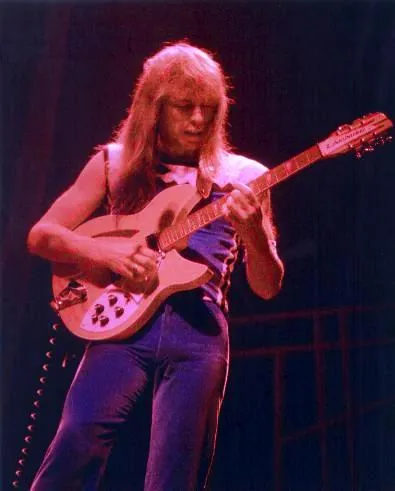
The group’s later fame is often reduced to Steve Howe’s move to Yes or drummer Twink’s work with The Pretty Things. The recordings deserve their own history. Keith West and Ken Burgess wrote much of the melodic material, Howe treated guitar tone as part of composition, Junior Wood and Twink gave the songs physical momentum, and producer Mark Wirtz turned those elements into densely layered pop.
Formation & History
Tomorrow developed from the In Crowd, a London beat and soul group that had released three Parlophone singles in 1965. Singer Keith West, guitarist Steve Howe and bassist John “Junior” Wood were joined by drummer John “Twink” Alder as the music and stage presentation turned psychedelic. Producer Mark Wirtz, already working with Howe, took a particular interest in “My White Bicycle”; the recording was made at EMI in March 1967 and released by Parlophone in May.
The band performed at underground venues and recorded the first session broadcast by John Peel on BBC Radio 1 in September 1967. That month Parlophone issued “Revolution” with “Three Jolly Little Dwarfs” on the reverse. At the same time, Wirtz’s studio project “Excerpt from A Teenage Opera,” sung by West and featuring Howe, became a British No. 2 hit. The solo success redirected attention toward West while Tomorrow’s own releases remained commercially marginal.
The quartet separated before its album reached shops in February 1968. Twink and Wood made one single as the Aquarian Age; Twink then joined The Pretty Things during S. F. Sorrow. Howe worked with West again, formed Bodast and joined Yes in 1970. The delayed LP therefore documents a finished group language rather than the beginning of a career.
Sound & Style
“My White Bicycle” begins with Twink’s urgent drum pattern before reversed guitar, whistles and layered voices make the track feel as if it is moving in two directions at once. The words refer to the Amsterdam Provo movement’s White Bicycle Plan, so the studio effects reinforce an image of public freedom rather than decorating an unrelated novelty lyric.
The album varies that design. “Real Life Permanent Dream” uses vocal harmony and sitar-like guitar colour; “Revolution” is built around Howe’s intricate electric riff; “Auntie Mary’s Dress Shop” turns English character comedy into a theatrical miniature. The cover of “Strawberry Fields Forever” is heavier and more guitar-led than The Beatles’ recording. Wirtz’s keyboards and production expand the sound, but the rhythmic identity remains that of West, Howe, Wood and Twink.
Essential Albums
Tomorrow
1968The original British album contains eleven tracks recorded chiefly in spring 1967 and released only after the band had split. Side one moves from the political-studio construction of “My White Bicycle” through character songs and dream imagery to the riff-driven “Revolution.” Side two becomes more theatrical, placing “Auntie Mary’s Dress Shop” and “Three Jolly Little Dwarfs” around a transformed “Strawberry Fields Forever” and Howe’s extended guitar role in “Now Your Time Has Come.” The sequencing shows why this is more than a collection of period singles.
Key tracks: My White Bicycle · Revolution · Hallucinations
Open album guide → View on Amazon →Affiliate note: Amazon links on this page may earn RetroForge Records a small commission, at no extra cost to you.
Deeper Cuts
Written by Keith West under his birth name Keith Hopkins with Ken Burgess, and inspired by Amsterdam’s Provo White Bicycle Plan. Mark Wirtz’s production binds reversed guitar, whistle, compressed drums and close harmony into the political image. Parlophone issued it in May 1967 with “Claramount Lake” as the B-side; that B-side was not part of the original eleven-track LP.
Released in September 1967, the second single gives Howe a co-writing credit alongside Hopkins and Burgess. Its circular electric-guitar figure and group refrain are more aggressive than the first single, while the B-side “Three Jolly Little Dwarfs” uses percussion and studio play for a deliberately comic contrast.
The In Crowd’s “That’s How Strong My Love Is” records the quartet’s soul-based prehistory before the psychedelic change. After the split, Wood and Twink’s Aquarian Age single “10,000 Words in a Cardboard Box” continued their partnership with Wirtz. Expanded Tomorrow editions often add both chapters, but they should remain distinct from the original LP sequence.
Why They Still Matter
Tomorrow matter because their surviving catalogue connects the live force of freakbeat to the constructed possibilities of British psychedelic pop. Wirtz’s effects are inseparable from the compositions, yet the recordings still reveal four musicians responding to one another. That balance keeps “My White Bicycle” and “Revolution” vivid after their immediate London-underground setting has receded.
The group also supplies an important prehistory for several later careers without being reducible to them. Howe’s command of texture and counterpoint precedes Yes, while Twink’s drumming leads directly toward The Pretty Things and the Pink Fairies. More importantly, West, Burgess, Wood and Wirtz help define a compact one-album language whose melodic intelligence survives the period whimsy.
Sources & Further Reading
Connected archive routes
Explore This Band
Continue through the RetroForge knowledge graph
Curated paths into the people, records, events and ideas that give this subject its wider musical context.
Genres and scenes
- Freakbeat
- Psychedelic Pop
Festivals
- Strawberry Fields 1970: The Festival That Hid Behind a Motorcycle Race