

Edition timeline
The Soers festival opens
A local initiative begins three days of international music in an equestrian stadium.
British and German routes converge
Heavy blues, progressive rock and experimental West German groups share one programme.
Poster and stage diverge
Several advertised artists do not play, while the running order pushes others out.
Pink Floyd closes the arc
The band performs long-form material including the early “Amazing Pudding.”
Why this event matters
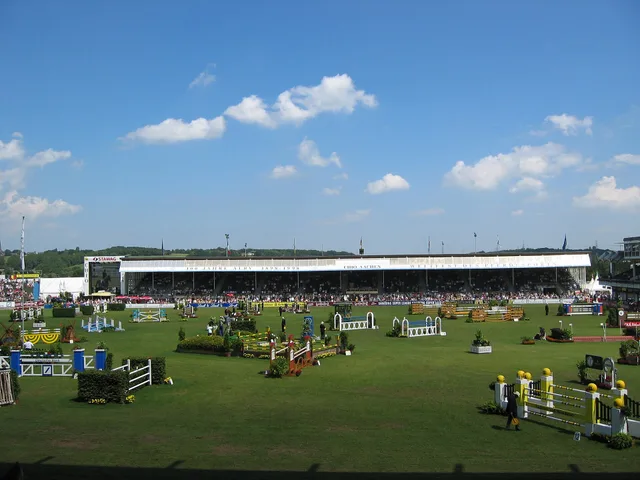
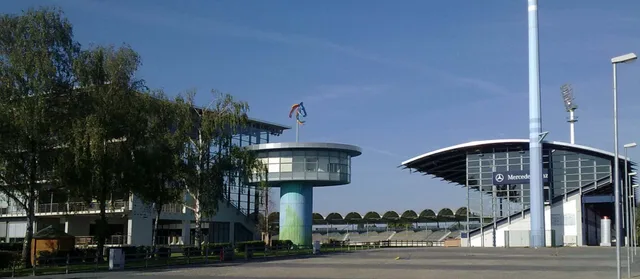
Aachen was a crossroads at the moment European rock categories were hardening into recognisable forms. Pink Floyd, Caravan and Kevin Ayers shared the weekend with Can, Kraftwerk and Amon Düül II, while Deep Purple, Free and Taste made blues-derived rock heavier. The festival did not create progressive rock or krautrock. Its importance lies in proximity: these futures still occupied one broad “pop” programme before criticism and marketing separated them. Local students and young organisers attempted an international event despite limited direct experience, then brought in Konrad Mallison’s knowledge from the Essen Pop & Blues festivals. Venue negotiations concluded close to showtime, with substantial rental, insurance and guarantee requirements. Early audience hopes were much larger than the final crowd. The planning history reveals early professionalisation as a hybrid of youth initiative, municipal caution, borrowed expertise and contractual risk. The final site was the Soers equestrian-sports complex rather than the initially considered Tivoli. Defined roads, entrances, service areas and a stadium bowl gave Aachen more infrastructure than an exposed meadow. It did not turn the crowd into conventional seated spectators. Plans to keep parts of the interior neatly controlled gave way under mass attendance, showing how festival behaviour could repurpose an orderly sports architecture without fully escaping its boundaries. Confirmed performers include Deep Purple, Free, Golden Earring, Edgar Broughton Band, Taste, Caravan, Can, Kevin Ayers and the Whole World, Mungo Jerry, Kraftwerk, Amon Düül II, Tyrannosaurus Rex, Champion Jack Dupree and Pink Floyd. Traffic and Fairport Convention were advertised but absent. Van der Graaf Generator were reportedly on site yet lost their slot when the schedule slipped. Presence, billing and performance remain three separate claims.

What the audience experienced
Listeners moved rapidly from direct blues and hard rock to whimsical song, long-form psychedelia and emerging German electronics. Local German youth, travelling festivalgoers and international fans shared a semi-contained stadium at the city’s edge. The crowd should not be imagined as one stylistic tribe. Aachen’s distinctive experience was precisely the whiplash of different musical futures appearing before audiences had settled into later genre loyalties. Municipal services and technical support gave Aachen comparative competence, and it avoided the destructive weather that would hit Fehmarn in September. The dense bill nevertheless put constant pressure on changeovers and the timetable. Artists vanished, moved or lost slots as delays accumulated. A strong production framework could reduce risk without making poster ambition physically possible, particularly when long progressive sets occupied more time than compact pop scheduling assumed. Aachen provides an unusually clear editorial lesson. Traffic and Fairport Convention on printed material are evidence of promotion, not performance. Van der Graaf Generator’s reported presence without a set shows that even arrival is insufficient proof. Pink Floyd Archives explicitly distinguishes poster names from documented performers. This method protects the page from the common festival-history error of converting attractive graphic design into an impossible historical super-lineup. Can’s rhythmic experimentalism, Kraftwerk’s pre-electronic-rock transition and Amon Düül II’s communal psychedelia represented different German directions. Sharing infrastructure with Pink Floyd and Deep Purple made those groups visible inside an international touring economy before “krautrock” became a convenient export label. Aachen did not erase their differences. It shows German experimental music operating beside, rather than outside, British progressive and heavy-rock circuits.

Pink Floyd on Sunday
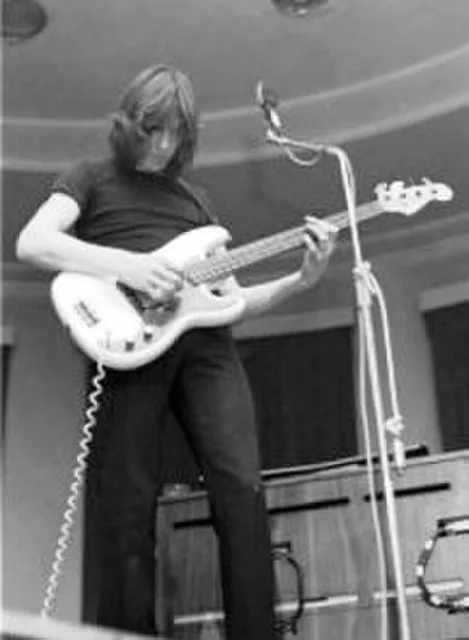
Pink Floyd’s documented 12 July set included “Atom Heart Mother” in its early “Amazing Pudding” form, “Set the Controls for the Heart of the Sun” and “A Saucerful of Secrets.” These extended works demonstrate how far the festival programme had moved beyond the three-minute single. Their survival through archive documentation and audience recordings also gives Aachen a more precise performance history than many contemporaneous one-off festivals. Aachen survives through poster research, Pink Floyd set documentation, recordings associated with several performers, regional broadcast material and local memories. Each tape or film fragment must be treated separately; evidence of a performance does not grant hosting rights. The page’s reusable photographs show the Soers venue in later years and period Roger Waters context. Captions prevent modern stadium views from being mistaken for the 1970 stage layout. With hindsight, Aachen resembles a map whose routes lead toward progressive suites, heavy metal, motorik rhythm, electronic modernism and continental hard rock. The value of hindsight is comparative, not prophetic. In July 1970 performers and listeners did not yet know which names would become canonical. They encountered a shared festival category broad enough to contain Champion Jack Dupree, Kraftwerk, Can, Deep Purple and Pink Floyd over one weekend. Aachen did not become an annual brand, but it linked the Essen indoor series to continental open-air culture and placed West German experimental groups inside a major international bill. Its relatively orderly operation stands in productive contrast with Fehmarn two months later. Alongside Essen and Kralingen, it demonstrates that continental Europe had a dense, self-organising festival network rather than merely receiving British and American culture second-hand.

_-_NARA_-_553890.jpg)
Follow the festival beyond the field
Timeline
Related genres
Related band guides
Explore by sound
Essential listening
Sources and further reading
- Aachen 1970 poster and performance archivePink Floyd Archives · accessed 23 July 2026
- Aachen Open Air Pop Festival reconstructionUnser Aachen · accessed 23 July 2026
- Popfestival Soers July 1970Alsdorfer Stadtmagazin · accessed 23 July 2026
- Essener Pop & Blues contextWDR Rockpalast · accessed 23 July 2026
- Aachen-Soers licensed mediaWikimedia Commons · accessed 23 July 2026
Image credits5 licensed images
A later aerial view of the Soers stadium complex. It documents the venue, not the 1970 festival configuration — Unknown creator — Wikimedia Commons — CC BY-SA 3.0 · source record · CC BY-SA 3.0
Converted to WebP and resized; no generative or compositional alterations.
The main Aachen-Soers stadium in a later photograph, used to explain why the festival occupied a controlled arena rather than an open meadow — BayernUli — Wikimedia Commons — CC BY 3.0 · source record · CC BY 3.0
Converted to WebP and resized; no generative or compositional alterations.
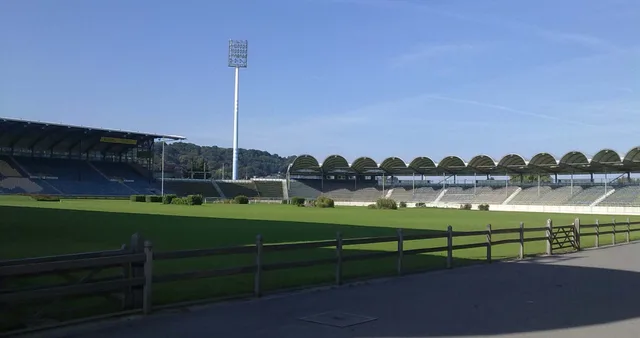
A later interior view of the Soers stadium; the 1970 stage and audience layout were different — BayernUli — Wikimedia Commons — CC BY 3.0 · source record · CC BY 3.0
Converted to WebP and resized; no generative or compositional alterations.
Roger Waters performing in 1970. This period photograph provides context for Pink Floyd’s Sunday appearance and was not taken in Aachen — John Rettie - http://www.rocknrollphotographs.com/ — Wikimedia Commons — CC BY-SA 3.0 · source record · CC BY-SA 3.0
Converted to WebP and resized; no generative or compositional alterations.
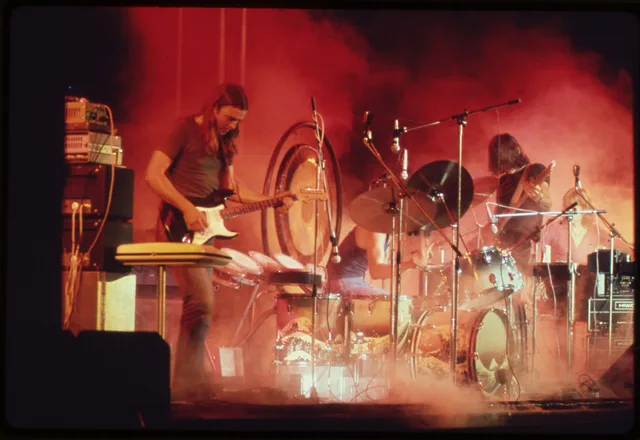
A public-domain period rock-concert image used for general production context; it does not depict the Aachen festival — Erik Calonius — Wikimedia Commons — Public domain · source record · Public domain
Converted to WebP and resized; no generative or compositional alterations.